
Understanding the “Tiger Stripe” Phenomenon
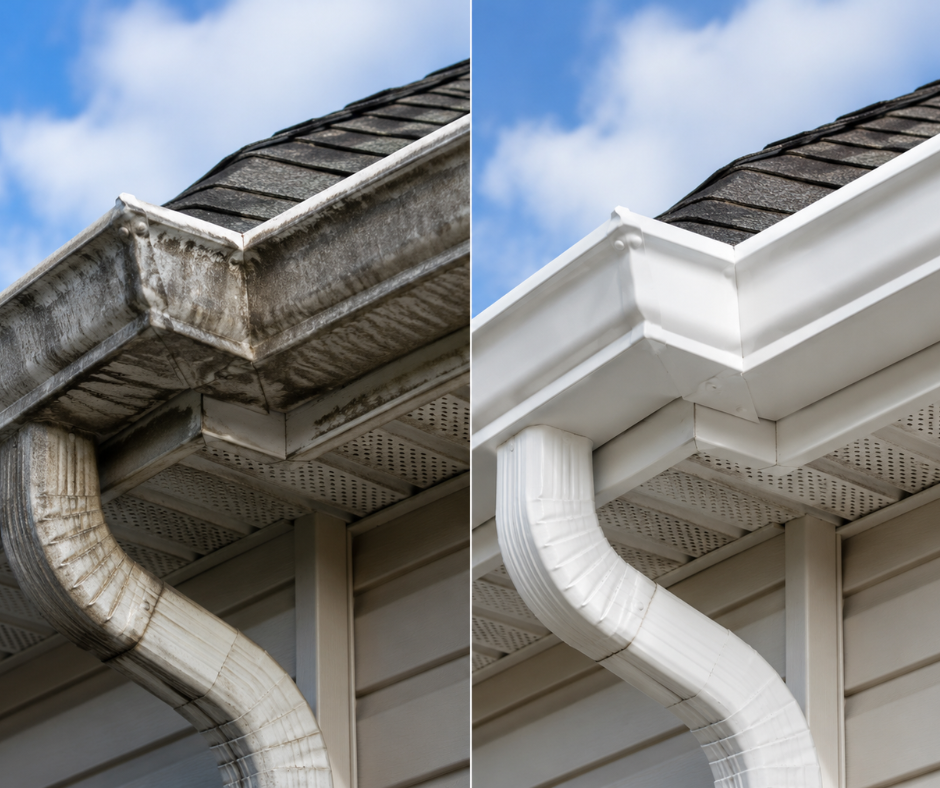
Many Virginia Beach homeowners notice unsightly black streaks on their gutters and assume they are dealing with simple surface grime. In reality, these “tiger stripes” are typically a combination of oxidation, roof runoff, and embedded pollutants that bond to the gutter face over time.
The Science Behind Gutter Oxidation
In a coastal market like Virginia Beach, where salt air, persistent humidity, wind-driven rain, and summer heat all accelerate exterior wear, that staining tends to develop faster and become more stubborn than many homeowners expect. The chemistry matters. Most aluminum gutters are coated with a baked-on finish, but that outer layer gradually degrades as it is exposed to ultraviolet light, moisture, and airborne contaminants.
As the surface begins to oxidize, it becomes more porous and more reactive. Roof runoff often carries asphalt residue, granules, and oily pollutants down the edge line, where they mix with organic debris and atmospheric contaminants. That mixture creates the dark vertical striping homeowners see, and once it chemically bonds to the oxidized finish, ordinary soap, a garden hose, or even standard pressure washing will not reliably remove it.
The Elite Exteriors Brightening Process
This is why gutter brightening is a specialized restoration service, not just an add-on rinse. At Elite Exteriors, we use professional-grade tools designed for controlled, low-pressure application rather than brute force. Our process may include dedicated extension wands, soft-bristle detailing tools, proportioned downstream or pump systems, and careful rinse control so we can treat staining precisely without harming surrounding siding, trim, or landscaping.
The goal is to address the oxidation-related staining while preserving the gutter’s finish and overall structural integrity.
Eco-Friendly Chemistry for Superior Results
We also rely on eco-friendly brightening agents formulated to break down oxidation staining, asphalt runoff residue, and embedded environmental buildup. These professional solutions are stronger and more targeted than typical retail cleaners, but they are also used with the discipline that comes from field experience. Proper dwell time, surface temperature awareness, dilution control, and thorough rinsing all matter. When handled correctly, the chemistry does the hard work so excessive pressure is unnecessary.
Why DIY Gutter Cleaning Often Falls Short
That distinction is important for homeowners considering a DIY attempt. Scrubbing aggressively or using too much pressure can leave permanent marks, remove paint, force water behind the gutter line, or damage nearby finishes. Many store-bought products also underperform because they are not designed to treat oxidation at a professional level.
In practice, DIY methods often lighten the stain unevenly or create a “clean patch” effect that makes the remaining tiger stripes stand out even more. Professional-grade tools and chemistry produce a more uniform result and reduce the risk of accidental damage.
The Impact of Virginia Beach’s Coastal Climate
For Virginia Beach homes, timing and maintenance also play a major role. Coastal exposure means gutters are constantly dealing with moisture cycles, airborne salt, pollen, mildew pressure, and storm runoff. If gutters are already holding organic debris, that trapped moisture can worsen staining and shorten the time between cleanings.
Pairing brightening with seasonal gutter cleaning helps remove the debris load that contributes to overflow and runoff marks. It also makes it easier to inspect the full gutter line for wear, oxidation, and drainage issues before they become more costly.
Brightening vs. Standard House Washing
Homeowners should also understand that brightening is different from a general exterior wash. A house wash is designed to remove surface algae, mildew, and dirt from siding and trim. Gutter brightening addresses the darker bonded staining on the gutter face itself.
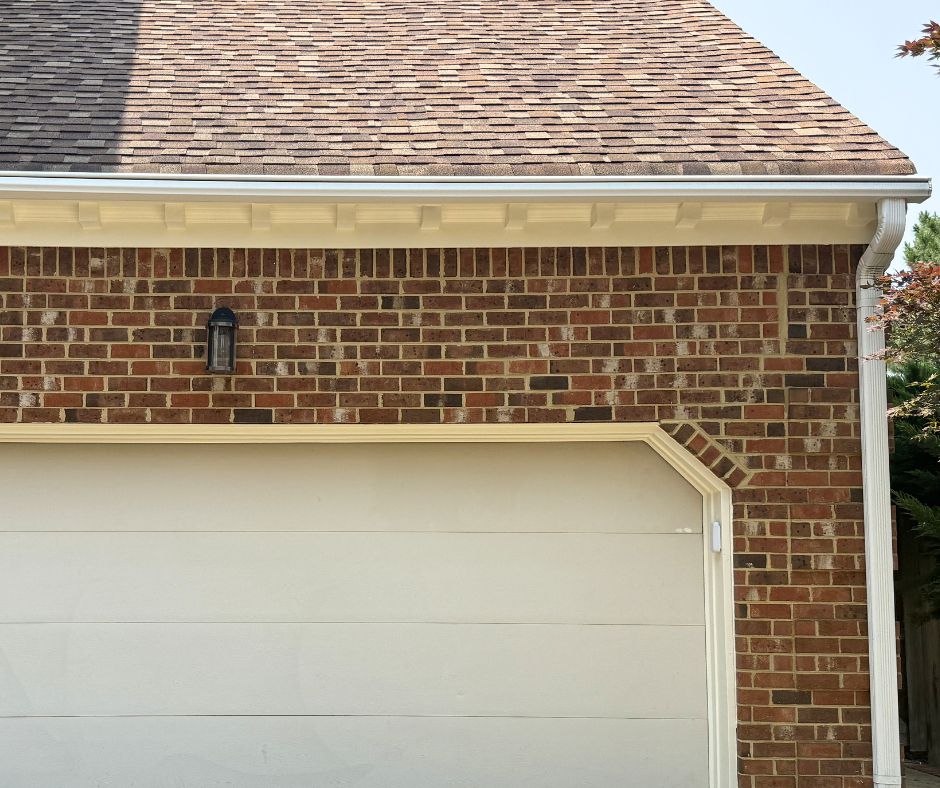
For a broader understanding of when low-pressure methods are preferable to force, review our guide on soft washing vs pressure washing. When the right process is used, brightening can significantly improve curb appeal and help your gutter system look maintained rather than prematurely aged. If your gutters still look streaked after routine washing, Elite Exteriors can help determine whether specialized brightening is the logical next step.
Frequently Asked Questions
What exactly causes those black “tiger stripes” on my gutters?
Tiger stripes form when roof runoff, asphalt-based pollutants, and environmental residue bond to the gutter’s oxidized outer finish. In Virginia Beach, humidity, salt air, and repeated wet-dry cycles can speed up that oxidation process, making the streaks darker and harder to remove.
Why is professional gutter brightening better than DIY cleaning?
Professional service uses specialized equipment, controlled low-pressure application, and commercial-grade brightening agents that target oxidation without relying on excessive force. DIY scrubbing or high-pressure rinsing often produces uneven results and can damage paint, trim, or the gutter surface itself.
Should gutter brightening be done with other exterior maintenance services?
Usually, yes. Gutter brightening pairs well with seasonal gutter cleaning and routine pressure washing so the full exterior presents consistently clean and well-maintained.
Summary
Gutter brightening is an important part of protecting curb appeal when oxidation, roof runoff, and coastal exposure leave visible black streaks behind. For Virginia Beach homeowners, addressing these stains with the right chemistry and professional-grade tools helps restore a cleaner appearance without risking damage from aggressive DIY methods.
Elite Exteriors provides the specialized brightening process, eco-friendly products, and low-pressure techniques needed to treat tiger stripes safely and effectively. When paired with routine gutter cleaning and exterior maintenance, professional brightening helps your home look better maintained and better prepared for the local climate.